For years I’ve been banging on about real food, ditching the ultra-processed junk, and rethinking our fear of fats.
I’ve written dozens of scientific papers on this, and written several best selling books (the What the fat? series). I’ve co-founded a company (PREKURE). All of these with the goal of closing the gap between what science knows and what health and medicine actually do.
The science-practice gap has never been bigger and lasted longer than the 1978 food pyramid and the high carb, low fat food dogma.
Well, the winds of change are blowing strong from across the Pacific. The US has just released its Dietary Guidelines for Americans 2025-2030, and it’s a game-changer. This isn’t just another tweak to the old food pyramid; it’s a huge reset that prioritises whole, nutrient-dense foods over the processed carbs and sugars that have fuelled our global health crisis.
I’ve poured over the document, scoured reactions from experts on X and the web, and compared it to my own efforts here in New Zealand. Let’s break it down: what’s in it, what’s brilliant, where it falls short, and why now is our moment to push for similar shifts in Australia and New Zealand. This could be epic for public health, but it’ll take grit to make it happen.
What Are These New Guidelines All About?
The guidelines, spearheaded by HHS Secretary Robert F. Kennedy Jr. and USDA Secretary Brooke Rollins under the Trump administration, They, like the Southpark episode predicted 10 years ago, literally flips the traditional food pyramid on its head.
The core message? Eat real food to “Make America Healthy Again.” They emphasise personalisation based on your age, activity level, and health needs, with a big push on gut health through fibre-rich, fermented foods and avoiding ultraprocessed foods.
Animal sourced proteins and fats are no longer demonsied, they are actively promoted as healthy.
Here’s a quick rundown of the eight key principles:
- Eat the Right Amount for You: Tailor calories and portions to your needs – no one-size-fits-all. This is a bit generic but does eventually get more specific age and stage related advice including pregnancy, older adults, kids, and those with chronic diseases.
- Prioritise Protein Foods at Every Meal: Go for high-quality sources like eggs, poultry, seafood, red meat, beans, nuts, and seeds. Aim for 1.2-1.6g per kg of body weight daily. This is a huge change to almost double previous recommendations.
- Consume Dairy: Full-fat, no added sugars – hailed as a powerhouse for protein, fats, vitamins, and minerals. Another massive change. Full fat dairy, despite overwhelming evidence to the contrary, has been demonised for decades.
- Eat Vegetables and Fruits Throughout the Day: Variety is key; whole forms preferred, with limits on juices. I like how they reversed it to put veges first.
- Incorporate Healthy Fats: From whole foods like avocados, nuts, olives, and even butter or beef tallow. Boom! This is huge. At last.
- Focus on Whole Grains: Fibre-rich options, but slash refined carbs like white bread and cereals. Kinda lame, but at least they single out cereals and bread.
- Limit Highly Processed Foods, Added Sugars, and Refined Carbohydrates: No amount of added sugars is recommended; avoid anything with artificial additives, dyes, or sweeteners. This is good because refined carbs now fall into the same category as sugar, because that’s what they are in your blood and that’s what counts.
- Limit Alcoholic Beverages: Less is better; none for some groups. Good, I suppose they could have gone one step further and said there is no evidence that any level of alcohol is healthy, but this is OK.
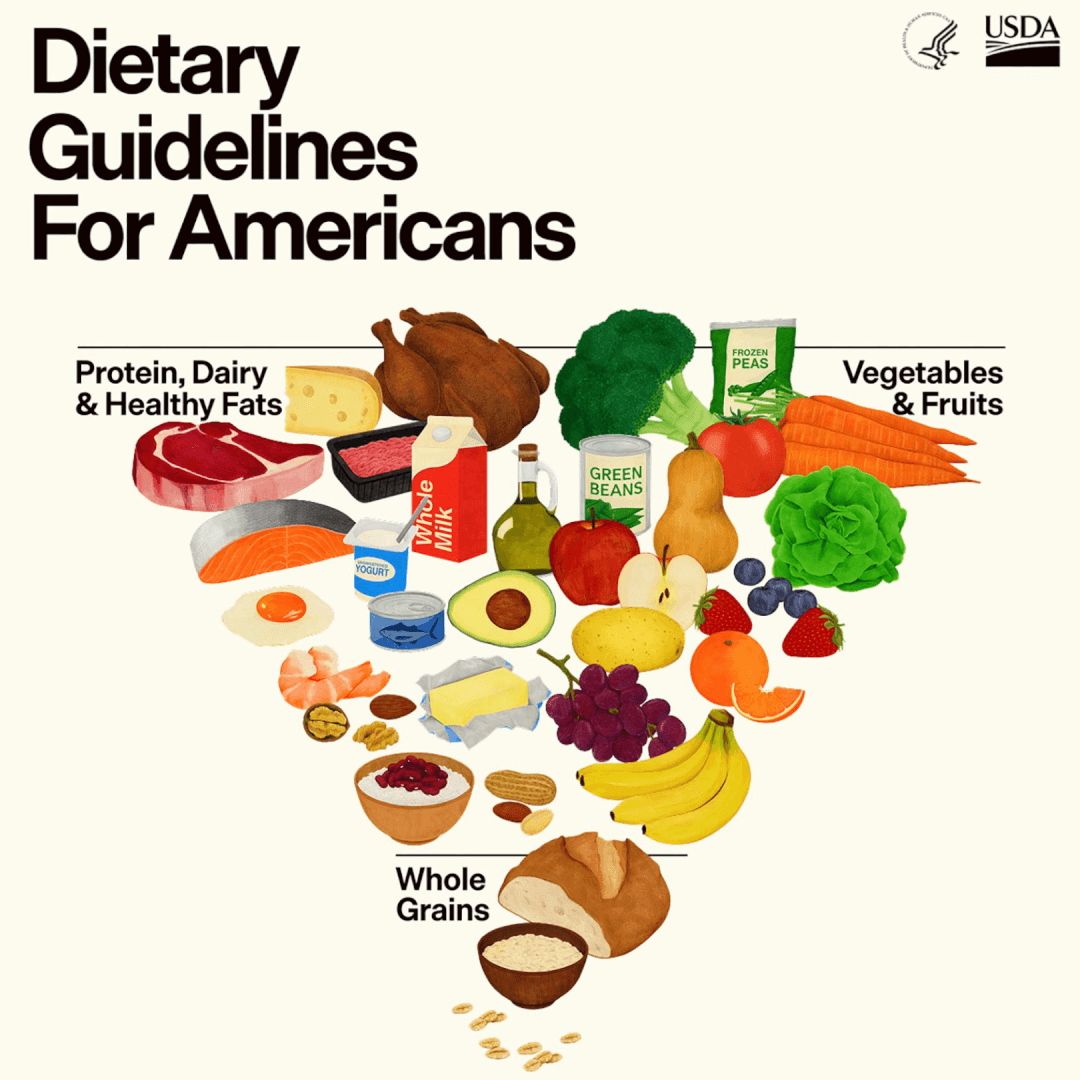
The visual? An actual flipped pyramid with proteins and dairy at the base, veggies and fruits in the middle, and whole grains at the top – a far cry from the carb-heavy base of old. This isn’t just advice; it influences school meals, hospitals, prisons, military rations, and federal programmes like SNAP, reaching millions.
What’s New and Good – A Breath of Fresh Air
This edition marks the “most significant reset of federal nutrition policy in decades,” and I couldn’t agree more. For starters, it’s super-focused on real food and explicitly calls out ultra-processed foods. That’s huge; previous guidelines danced around this, but now it’s front and centre. Reactions from experts like Dr. David Kessler (former FDA commissioner) praise this as a “major advance,” noting it aligns with evidence on how processed carbs drive inflammation and disease.
Animal products aren’t demonised anymore. Red meat and full-fat dairy get a thumbs-up, which is spot on given their nutrient density. Sugar gets hammered: no recommended amount, with strict per-meal limits (under 10g) and zero for kids under four. Low-carb diets get a nod for chronic conditions like diabetes: “Individuals with certain chronic diseases may experience improved health outcomes when following a lower carbohydrate diet. Work with your health care professional…” This is groundbreaking – the first time low-carb is conditionally endorsed federally.
Where It Falls Short – Let’s Be Honest
It’s not perfect. The saturated fat cap stays at 10% of calories, which feels inconsistent with the overall theme. Why promote butter, red meat, and full-fat dairy if you’re capping them – are they dangerous in these amounts? The evidence doesn’t back this limit – robust trials show no clear link to heart disease when fats come from whole foods.
I suspect this was a compromise to get other stuff over the line.
Stanford’s Christopher Gardner, himself a vegan, slams the red meat priority as ignoring “decades of evidence.” So there is always controversy either way on the edges..
On whole grains, I’m equivocal. The guidelines push fibre-rich ones (2-4 servings daily), which is fine for some, but they overlook how grains can spike blood sugar in insulin-resistant people – that’s most of us. Better to prioritise veggies for fibre without the carb load.
My Long Road
For two decades, I’ve championed these ideas through books, papers, and public fights. My “What the Fat?” series (co-authored with Prof Caryn Zinn and Craig Rodger) flipped the pyramid years ago, promoting low-carb, healthy-fat (LCHF) living with rules like “Go low ‘HI’” (human interference – aka avoid ultra-processed foods) and “Make fat your friend.” We sold over 200,000 copies worldwide, showing folks how to ditch sugars, moderate protein, and embrace fats for energy and health.
That was more than a decade ago.
Then there’s PREKURE’s food guidelines – real food first, minimise sugar, favour traditional fats, eat with others, and enjoy treats guilt-free. I led the development of these several years ago, and I think they precede and even outdo the new US guidelines.
Compare them side-by-side with the US ones – what do you think?:
Aspect
PREKURE Guidelines
US Guidelines 2025-2030
Core Focus
Whole, unprocessed foods; low sugar
Real, nutrient-dense foods; limit processed/sugars
Protein
From meats, eggs, dairy, nuts (as tolerated)
Prioritise at every meal; animal and plant sources
Fats
Traditional oils/fats over refined
Healthy fats from whole foods; cap saturated at 10%
Carbs/Grains
Minimise added sugar; no emphasis on grains
Whole grains; limit refined carbs
Behavioural
Plan time for food, eat slowly, community meals
Personalise, family cooking, gut health
Extras
Ethical/local sourcing; alcohol-free days
Limit alcohol; special populations (e.g., pregnancy)
PREKURE’s might edge it on behavioural depth and less grain push, but the alignment is striking.
Last year, my 2025 parliamentary petition in NZ called for health reform: shift 15% of the budget to prevention, overhaul dietary guidelines to focus on real food and metabolic health. New Zealand and Australia are still a long way behind this type of actual reform. The US at least is making something happen.
It’s been a long and sometimes lonely journey at this end of the planet. Sixteen years back Otago Uni academics wrote an open letter, cc’ed to the Vice Chancellor of my University, a letter – backed by the Heart Foundation, Cancer Society, Diabetes NZ and a bunch of other big names – declaring my nutritional approach dangerous and harmful to anyone who took it seriously. They were concerned about the widespread harm, including death, from my maverick and reckless understanding of the science.
Funny how time works. Their low-fat, carb-loaded advice looks embarrassingly wrong now.
Time for Australia and New Zealand to Step Up – But Watch the Headwinds
The world’s different now. With the US leading, AUS and NZ should follow suit – update our guidelines to prioritise prevention, real food, and metabolically centred (ie reduce glucose and insulin) options for chronic disease. Imagine going to the doctor or dietician and them telling you to eat according to the guidelines, and it would be real food, full of protein and healthy fats, low in processing which keeps you healthy. That will be a great day.
I think we are still a way off catching the US in this regard.
But political headwinds loom: like many things in America this could (and has already in some ways) turn this into a right vs left issue. These decisions shouldn’t be about politics at all, this affects all of us and we all want the same thing…to be healthy and spend more time with the people we love. There is always resistance to change especially with billions of dollars on the line for big food and big pharma, they will not go down quietly.
So this is our shot. Sign petitions, talk to MPs, demand evidence-based change. Prevention is cure – let’s make it happen.
What do you reckon? Hit reply with your thoughts.
Cheers,
Prof Grant Schofield


